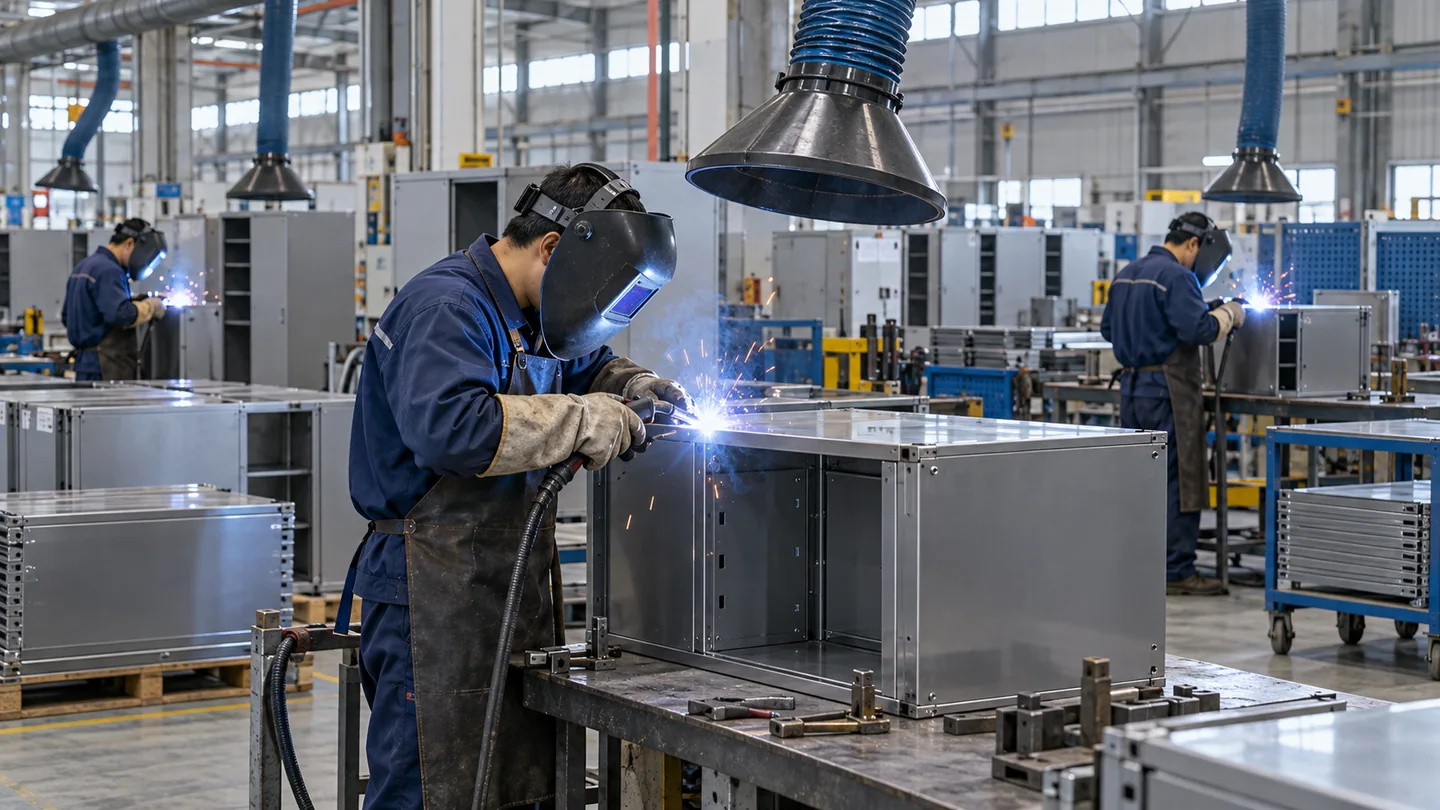
Understanding how steel office furniture is made helps a buyer ask better questions about drawings, components, finish and inspection. The process is a sequence of decisions and checks, not just a list of machines. This article describes a general manufacturing route for cabinets and related steel furniture. The route varies with the model, design and production arrangement. Illustrative scenes explain the stages; they do not verify that a particular facility, machine or process belongs to LEADTOP or is assigned to a specific order.
Begin with design and engineering confirmation
Manufacturing starts with a usable product definition. The drawing should identify the external dimensions, internal arrangement, important interfaces and selected accessories. Buyers should clarify which dimensions are critical to the application and which references control appearance. A cabinet intended for hanging files needs compatibility details; a workbench may require a different discussion about its working surface and intended task. Review drawing revisions with the quotation and sample records. An attractive rendering is helpful for discussion but cannot replace the information needed to make and inspect the product. Unconfirmed specifications should remain open until reviewed and agreed.
Treat the approved revision as the reference
Keep a clear identifier for the accepted drawing and configuration. If a handle, lock, panel or package changes later, record the change and its effect on cost, timing and inspection rather than relying on an undocumented conversation.
Prepare and cut the sheet metal
Panels and components are developed from sheet material using processes selected for the design and manufacturing route. Cutting, punching and related operations can create the outline, holes and openings needed for later stages. Ask how material identity and relevant dimensions will be checked for the order. Where thickness is specified, identify which part it applies to and how it is measured. Burrs, edge condition and the position of openings can affect assembly and user contact. A general workshop photograph does not establish material grade or cutting accuracy; those points need the appropriate records and checks for the product.
Form the panels and interfaces
Bending creates flanges, returns and other features that give sheet components their shape. The bend arrangement influences fit, usable internal space and how panels join. Buyers do not need to prescribe a machine setting, but they should identify important outcomes such as door gaps, shelf interfaces and alignment with accessories. Ask how fit is assessed before finishing and how a revised drawing is reflected in the formed parts. For steel storage cabinets, the relationship between the carcass, doors and internal fittings can matter more to daily use than an isolated external measurement.
Join and fabricate the structure
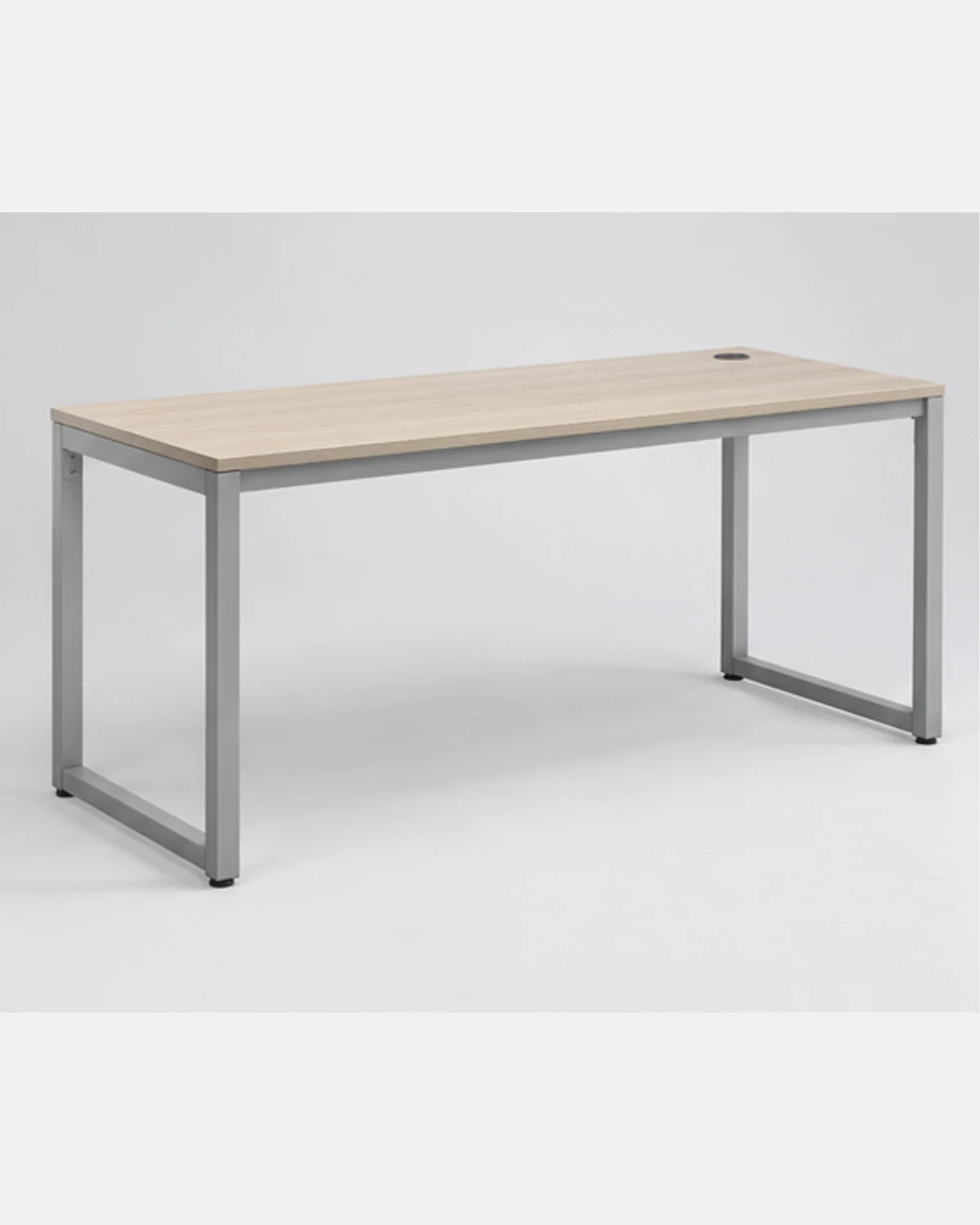
Depending on the model, components may be welded, mechanically joined or combined through several methods. The appropriate route depends on the design, assembly format and intended use. Discuss joint appearance, alignment and access to visible surfaces during sample review. A welded structure should not be described as interchangeable with a knock-down design without checking the actual construction. Likewise, tool cabinets and workbenches may have different assembly options by model. Specify the required result and inspection points rather than assuming one joining process is always better. Model-specific load and stability claims still require relevant supporting evidence.
Prepare the surface and apply the finish
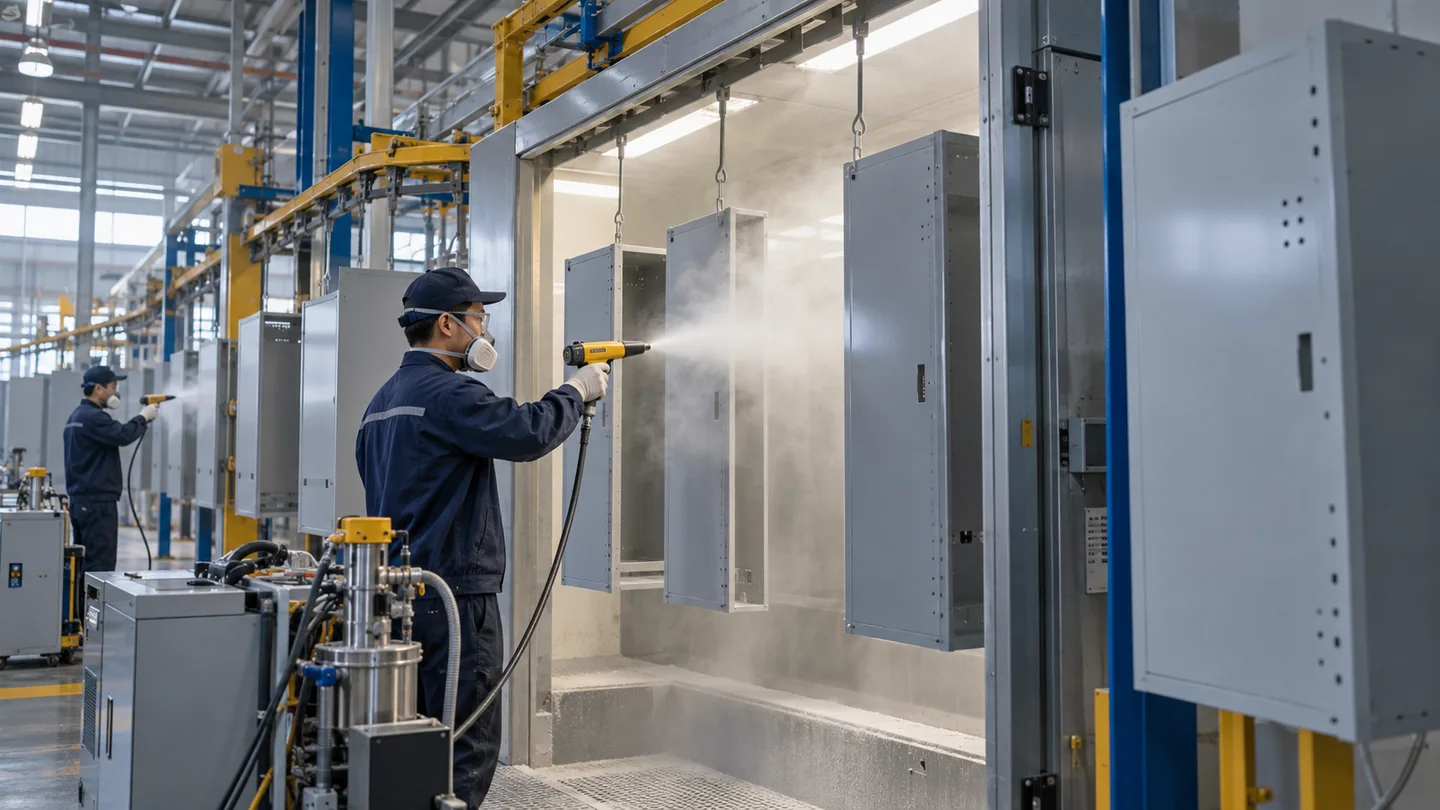
Surface preparation, coating application and curing are connected steps. The chosen system must be suitable for the material and intended environment, with processing conditions drawn from the relevant coating supplier's instructions. A color code alone does not define texture, gloss or surface acceptance. Ask for a finish sample and define which visible defects will be assessed. Do not infer corrosion resistance, coating thickness or chemical resistance from a photograph. The materials and finishes guide outlines the purchasing questions; actual coating selection and performance must be confirmed for the chosen configuration and use.
Assemble the functional components
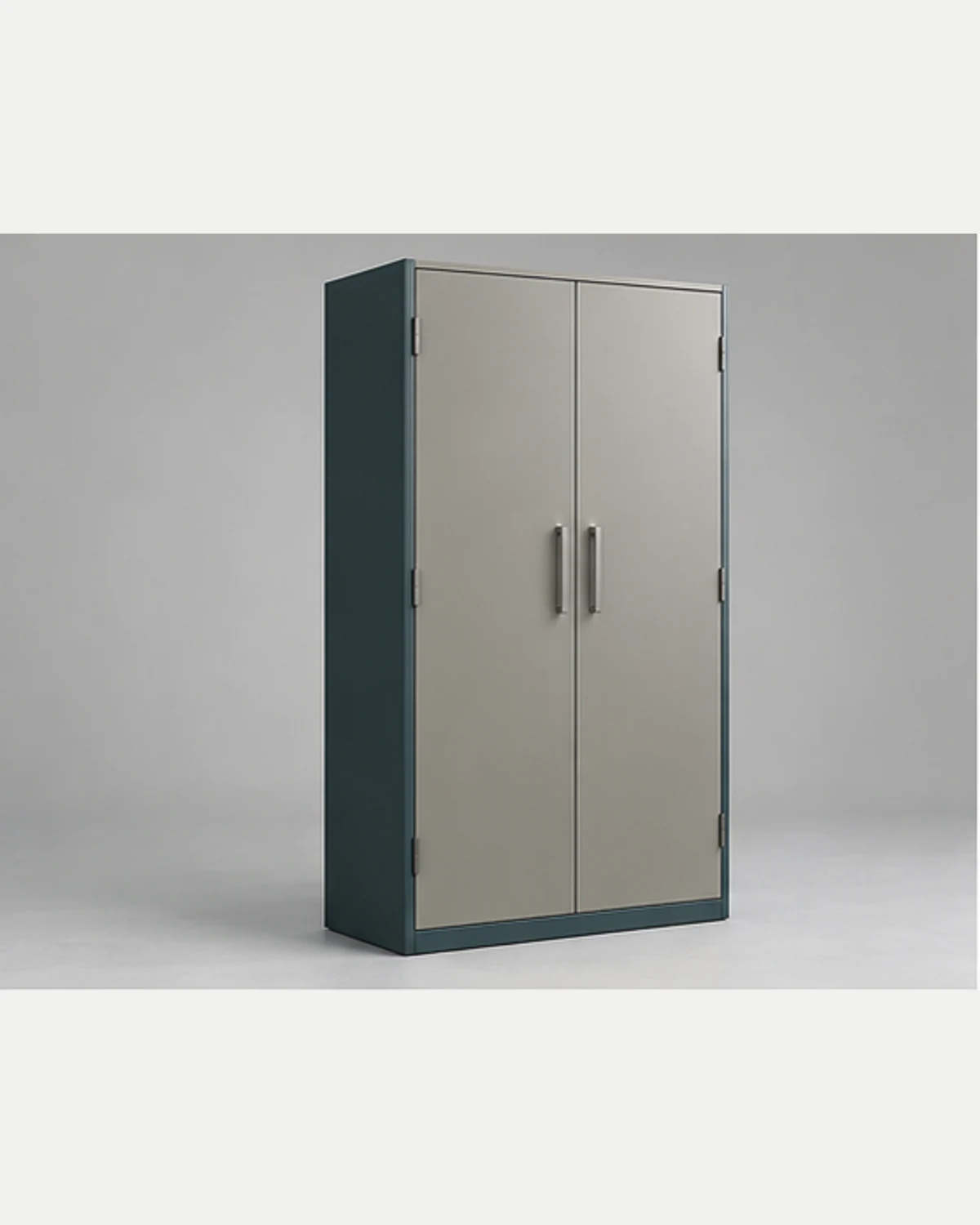
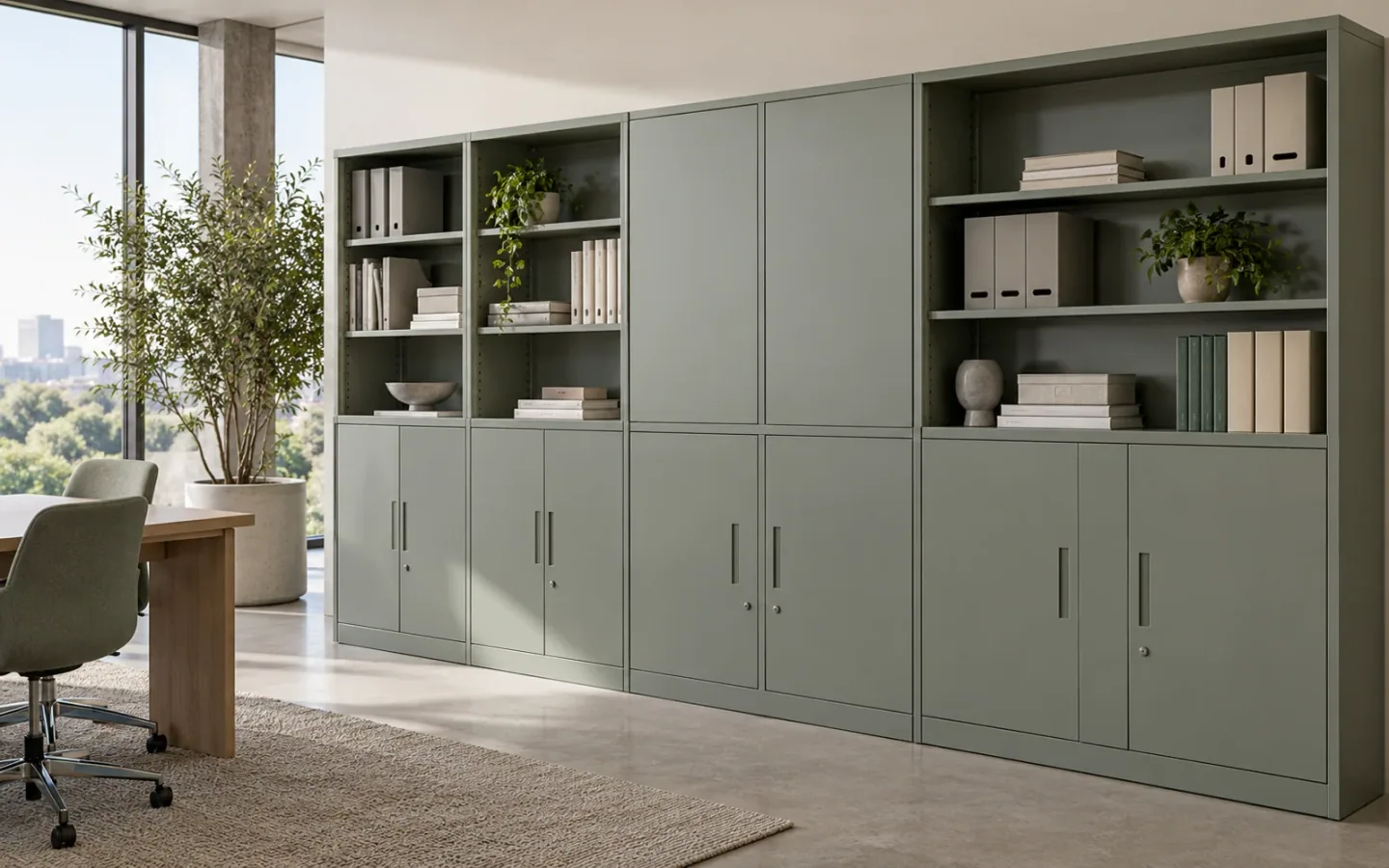
Locks, hinges, shelves, slides, handles and other accessories turn finished panels into a usable product. Review how these parts fit and operate together. A drawer cabinet needs a different functional check from a shelf cabinet or steel workbench. Confirm the accessory specification and what is included in the supplied package. For products assembled by the customer, review instructions, hardware identification and the process for reporting missing parts. Do not assume a photograph of a complete unit proves that the commercial offer includes the same accessories or the same delivery format.
Plan inspection around agreed requirements
Inspection should connect to the approved specification, not a vague expectation of good quality. Agree which dimensions, appearance points, functions, quantities and package details will be reviewed, by whom and at what stage. Decide whether a sample, in-process check, final check or independent inspection is needed for the order. Any test claim should identify the model and scope it covers. Keep findings and corrective decisions traceable to the order. General quality-management wording is not a certification claim and should not be used as a substitute for a report that a buyer's project specifically requires.
Close the loop with packaging and export preparation
The manufacturing route ends with a product that can be identified, handled and delivered in the agreed condition. Review protection, labels, carton contents and packing records, then coordinate the shipment documents and logistics responsibilities. For industrial projects, include site receiving and installation constraints early. LEADTOP can coordinate product development, manufacturing requirements, quality expectations, order management and export preparation within its integrated supply approach. Explore the production capabilities page and send your requirements with drawings, quantities and destination details so the actual route can be discussed without inventing equipment or capacity claims.