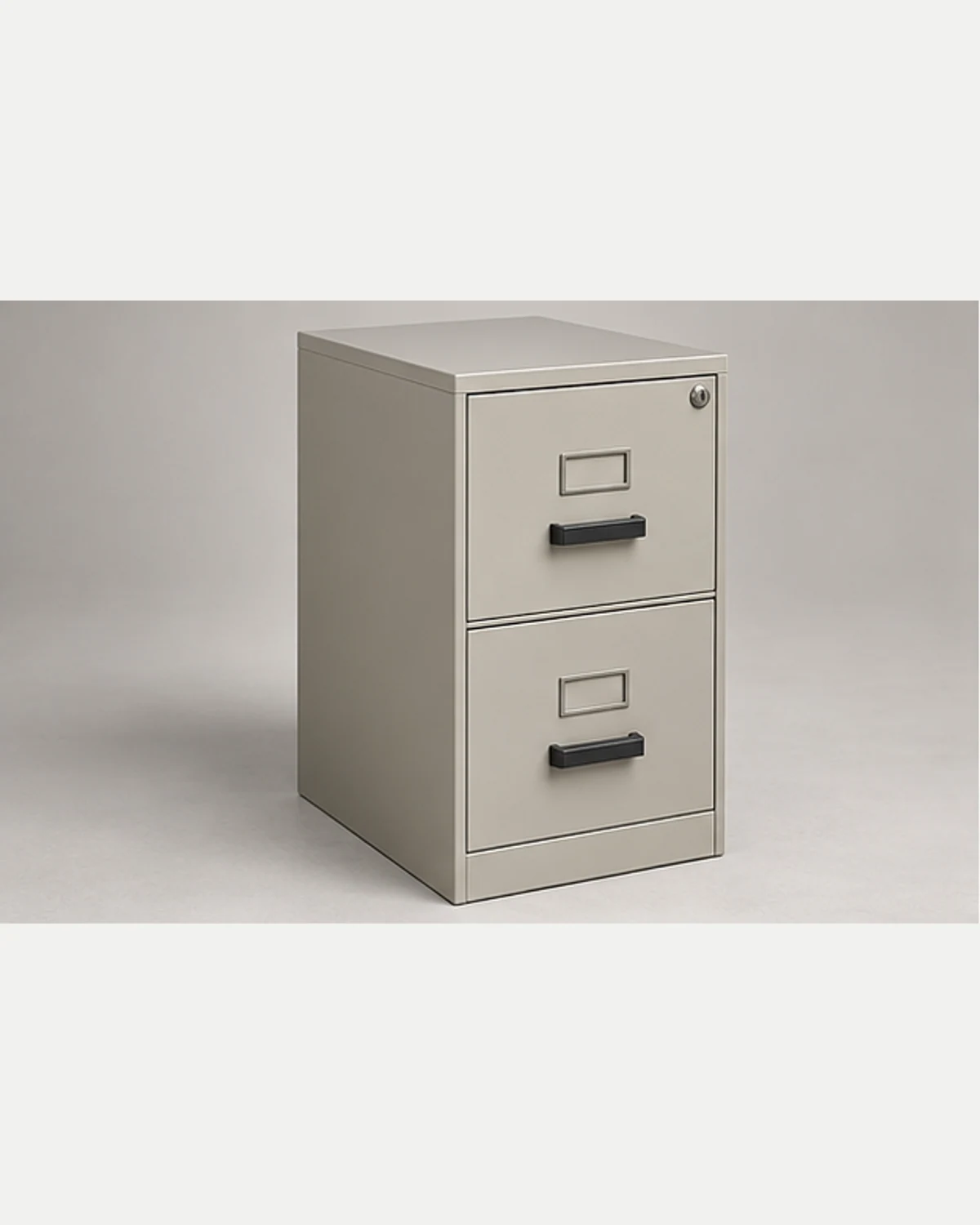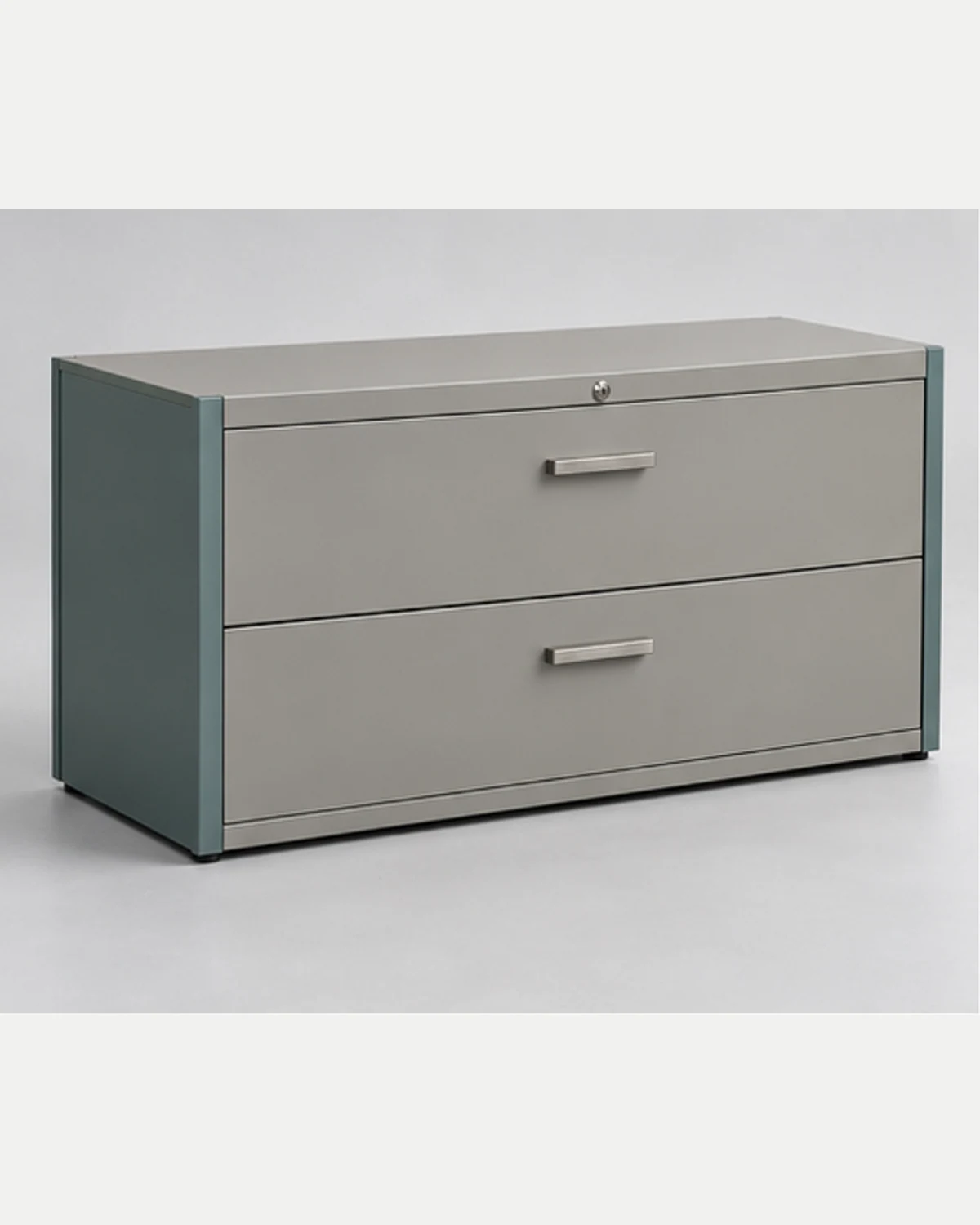
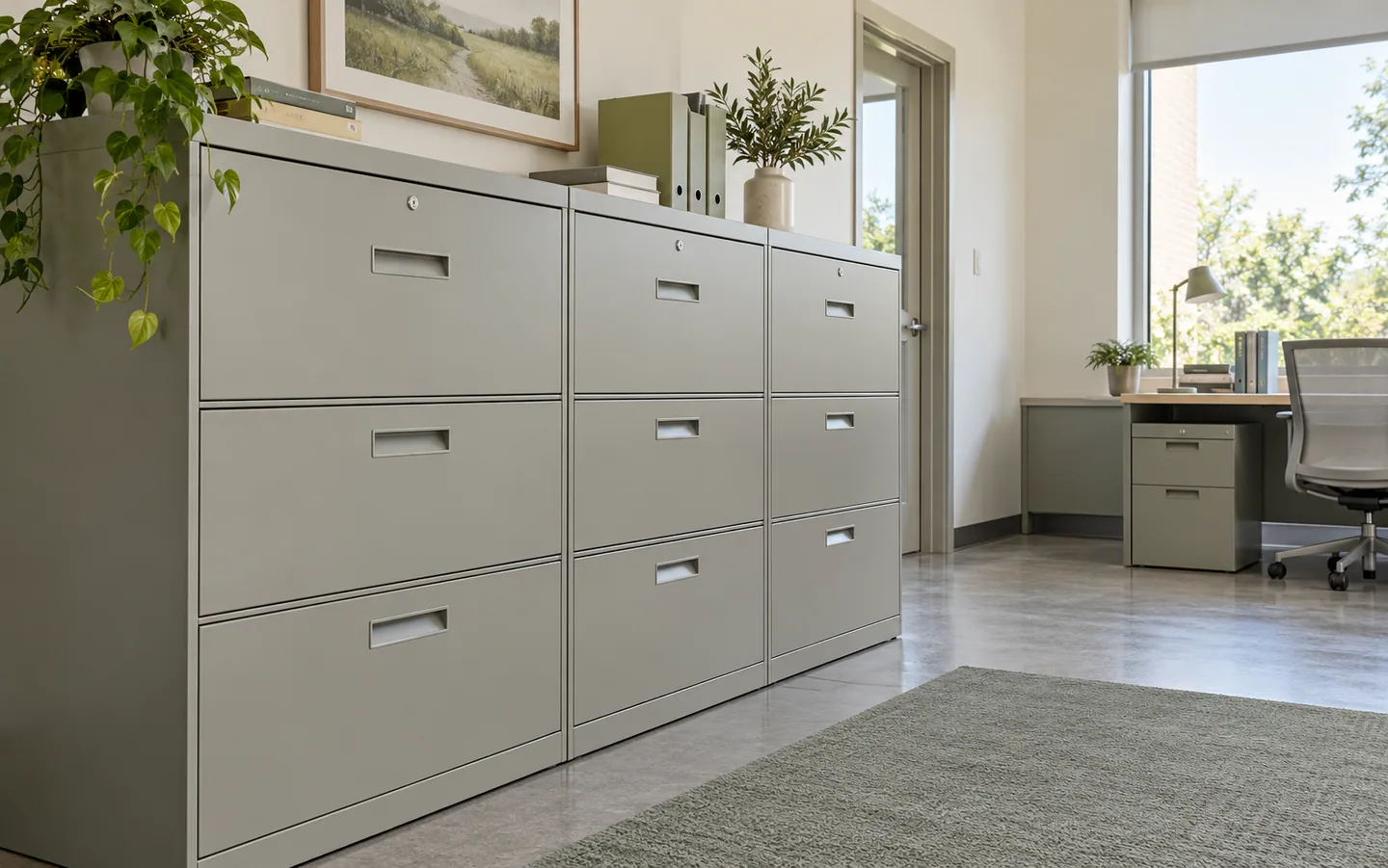
The choice between vertical and lateral filing cabinets is a purchasing decision about filing routines, room layout and the range a distributor wants to support. It should not become a competition between unsupported storage-capacity claims. For a bulk order, a buyer needs to understand which arrangement suits each location and how differences will be identified in the quotation. This comparison focuses on the questions that change the decision, with model-specific dimensions, materials and operating requirements still To be confirmed.
Compare the room in its working state
Begin with the route staff use to approach the cabinet and the space occupied when a drawer is open. Mark nearby desks, doors and shared circulation areas. A cabinet footprint on a furniture schedule does not show the whole operating area. Ask the project team to review both the stored position and the retrieval position before deciding which layout fits a location.
A vertical arrangement may be considered for a different wall section from a lateral arrangement, but neither label determines the result for every room. Request candidate drawings and compare the actual proposed configurations. Avoid applying an assumed depth or width to an entire product family. If the project has varied rooms, classify the locations rather than forcing one layout into all of them.
Treat the folder arrangement as a separate variable
Show how folders will face and how users read their labels. Drawer orientation and internal rails must be confirmed for the chosen configuration. A buyer changing from an existing filing system should include the stationery and retrieval routine in the comparison, not merely request a cabinet with a similar number of drawers.
Use a trade-off matrix instead of a winner label
Have each supplier answer the same decision fields. An empty answer is an unresolved question, not evidence that a configuration passes.
| Decision | Vertical proposal | Lateral proposal |
|---|---|---|
| Room fit | Drawing and operating area required | Drawing and operating area required |
| Folder direction | Internal layout to confirm | Internal layout to confirm |
| Retrieval routine | Demonstrate typical access | Demonstrate typical access |
| Variant control | Identify the approved reference | Identify the approved reference |
| Receiving plan | Confirm handling and packing | Confirm handling and packing |
The matrix deliberately contains no assumed capacities. Procurement can add approved measurements or requirements once evidence is available. Keep a note explaining why a proposal suits the assigned location so that a later substitution can be evaluated against the same decision.
Think about a distributor's range
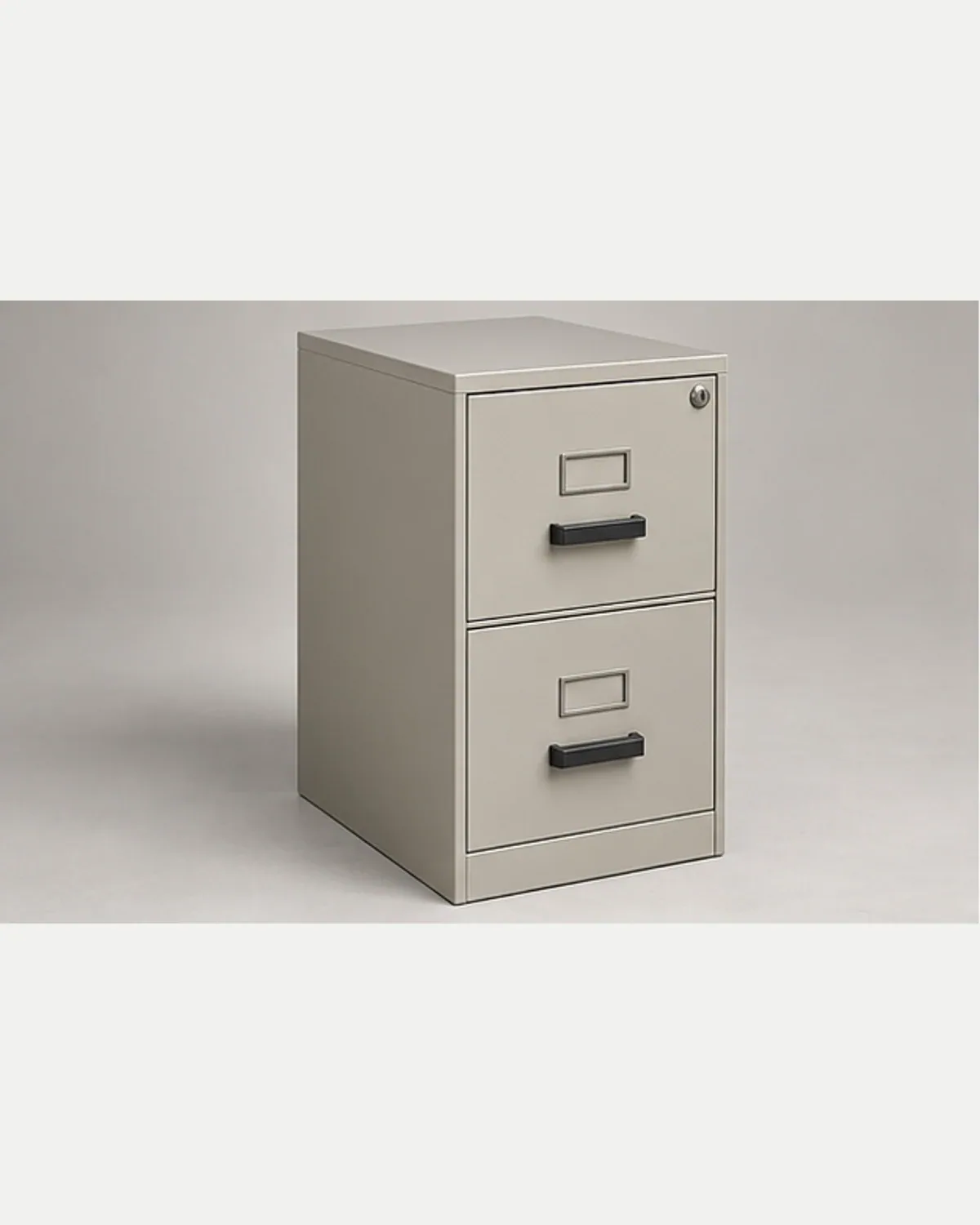
An importer developing a stock range must balance selection with the burden of maintaining variants. Decide which customer jobs each proposed configuration serves. If two products appear similar, ask whether their internal layouts, locks or accessories differ enough to need separate descriptions and references. Avoid advertising them as interchangeable until those details have been confirmed.
Record how the proposed range will be identified in cartons and order documents. A finish, rail arrangement or key option can matter to repeat purchasing even when it is not obvious in a small catalog image. For OEM/ODM versions, agree how drawing and sample revisions will be associated with the model reference. The supplier's response should identify configuration boundaries rather than rely on an informal product nickname.
Compare evidence and commercial scope together
Look at the vertical filing cabinet candidate and the lateral filing cabinet candidate as starting points for a comparison. Their names identify candidates; they do not verify load, stability, filing compatibility or a particular lock arrangement. Request the information relevant to the intended use before accepting a performance statement.
Ask whether each quotation includes the same finish reference, proposed hardware, packing arrangement and requested sample work. Comparing totals without checking exclusions can hide a difference in scope. If the project requires particular testing or installation information, identify it explicitly and connect the evidence to the configuration being quoted.
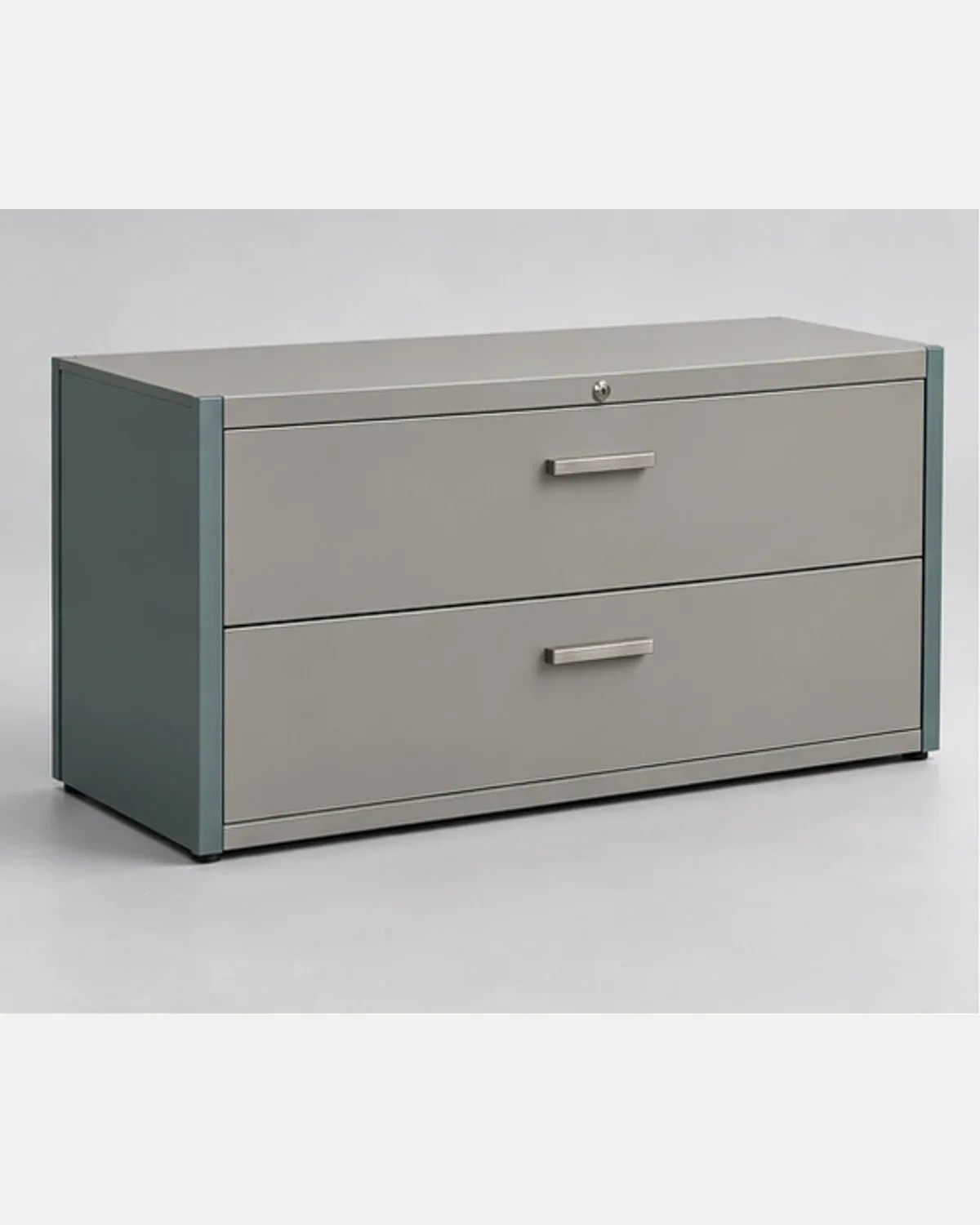
Choose by location and record the reason
The decision may be a mixed order rather than a single layout for every buyer. Use the filing cabinet range to shortlist candidates and the corporate office application to organize locations. Assign a configuration reference to each purchasing line, together with estimated quantity and destination.
Send the completed matrix to the quotation team. Ask for a response that identifies the proposed configuration and any remaining questions. The useful outcome is a documented choice for an intended job, supported by the relevant drawings and approvals. It is not a universal claim that one cabinet style always provides more value, space or performance than another.
Buyer FAQ
Which style uses less room?
Compare the actual proposed cabinet and its operating area in the intended location. Include drawer opening, user position and nearby circulation. A general style label is not enough to establish the space required for a specific configuration.
Should a distributor offer both arrangements?
That depends on the customer jobs the range is intended to serve. Define the distinct applications and the cost of maintaining variants before selecting stock lines. Do not create overlapping descriptions that hide meaningful configuration differences.
Can similar drawer counts be used for a price comparison?
Drawer count alone does not establish equivalent filing functions, usable space or commercial scope. Compare the folder arrangement, proposed hardware, evidence and packing alongside the quantity and quotation conditions before treating the offers as alternatives.