Under-desk pedestal clearance is a configuration decision for bulk office furniture orders. Use the workstation drawing and the receiving plan together, so a distributor compares the same usable arrangement across quotations.
For an office furniture importer, a mobile pedestal is often purchased alongside desks rather than as an isolated item. A drawer unit can appear suitable in a catalog and still interfere with a desk beam, cable tray or the user's working position. The practical purchasing task is to approve the complete workstation arrangement before confirming a batch. This checklist focuses on the information that buyers, distributors and OEM/ODM procurement teams should exchange. Candidate product dimensions, construction, load limits and availability remain To be confirmed for the selected model.
Start with the workstation rather than the cabinet
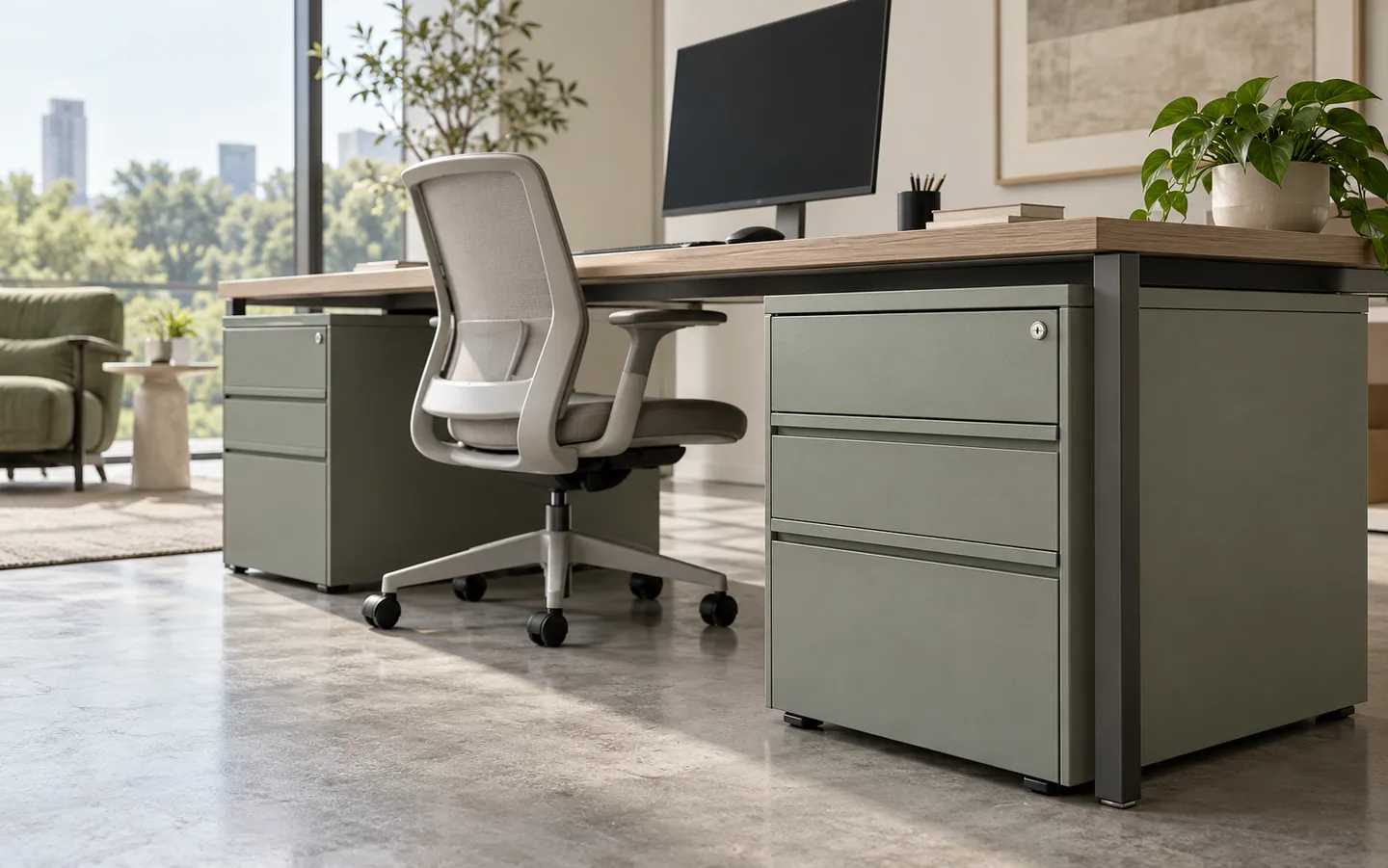
Ask the project team for a drawing of the actual desk, including the underside. A desktop outline alone does not show support beams, brackets, cable management or adjustable mechanisms. Record the intended pedestal position and whether the user should be able to move it to another side. Distinguish the clear space beneath the desk from the desk's overall dimensions. Check the route through doors and circulation areas if furniture will be delivered to an occupied office. These details create a shared reference for a supplier discussion instead of leaving each party to interpret the same photograph differently.
Include the space occupied during use
Show the drawer in its open position and leave room for the person using it. Consider access to the rear of a filing drawer, the position of handles and any objects stored beside the pedestal. If an office has several desk configurations, document each arrangement separately. Approval for one desk should not silently become approval for every workstation in the project.
Define the drawer functions before choosing a layout
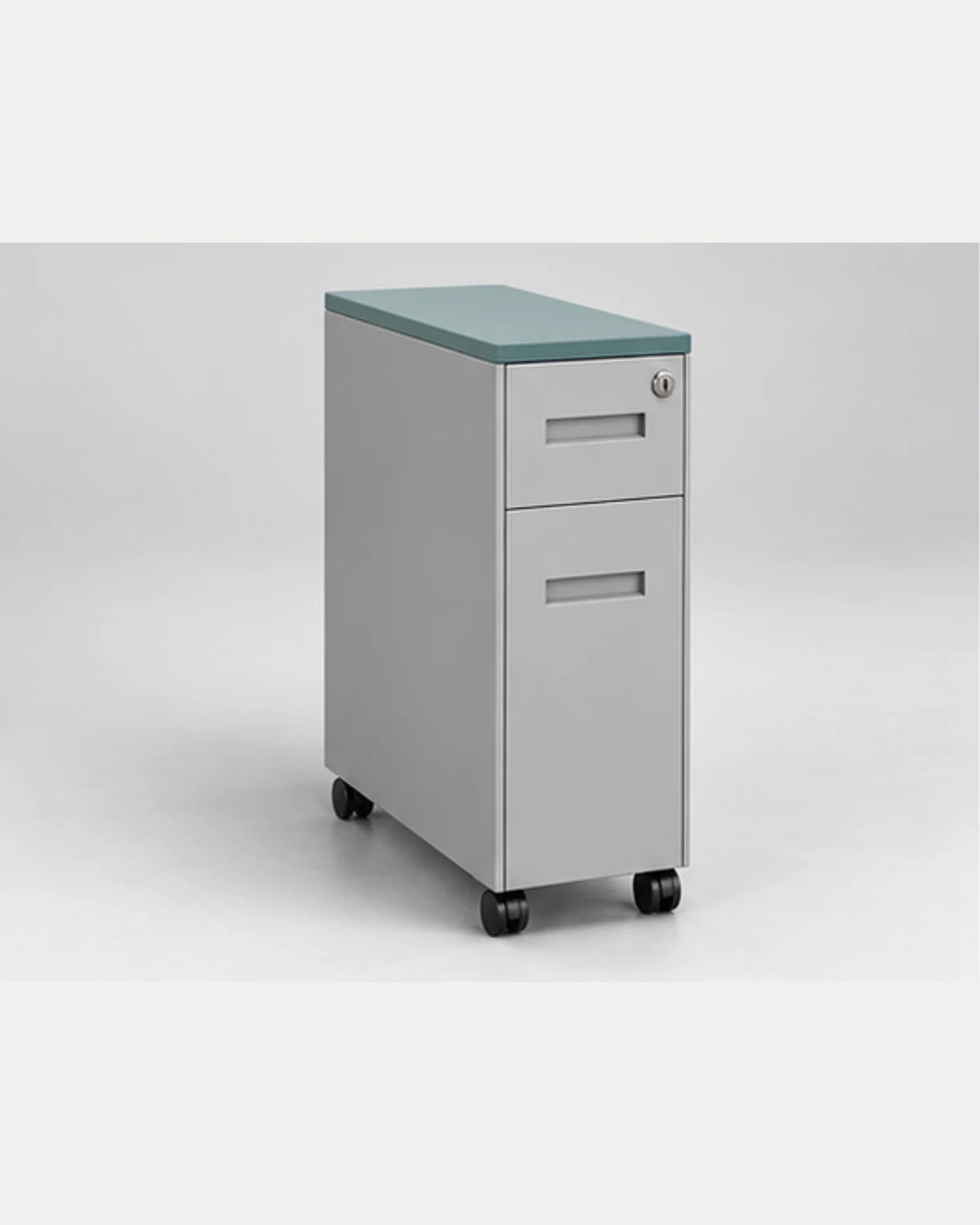
Separate stationery, personal items and working files. Ask the buyer to identify the folder format and whether files are suspended, stacked or stored in another arrangement. A drawing of the internal drawer space can resolve questions that an external cabinet photo cannot answer. For a distributor, decide whether the same drawer arrangement will serve the whole sales range or whether distinct versions need separate model references. Compare the mobile pedestal range to identify candidates, then confirm the specific configuration rather than assuming similar-looking units are interchangeable.
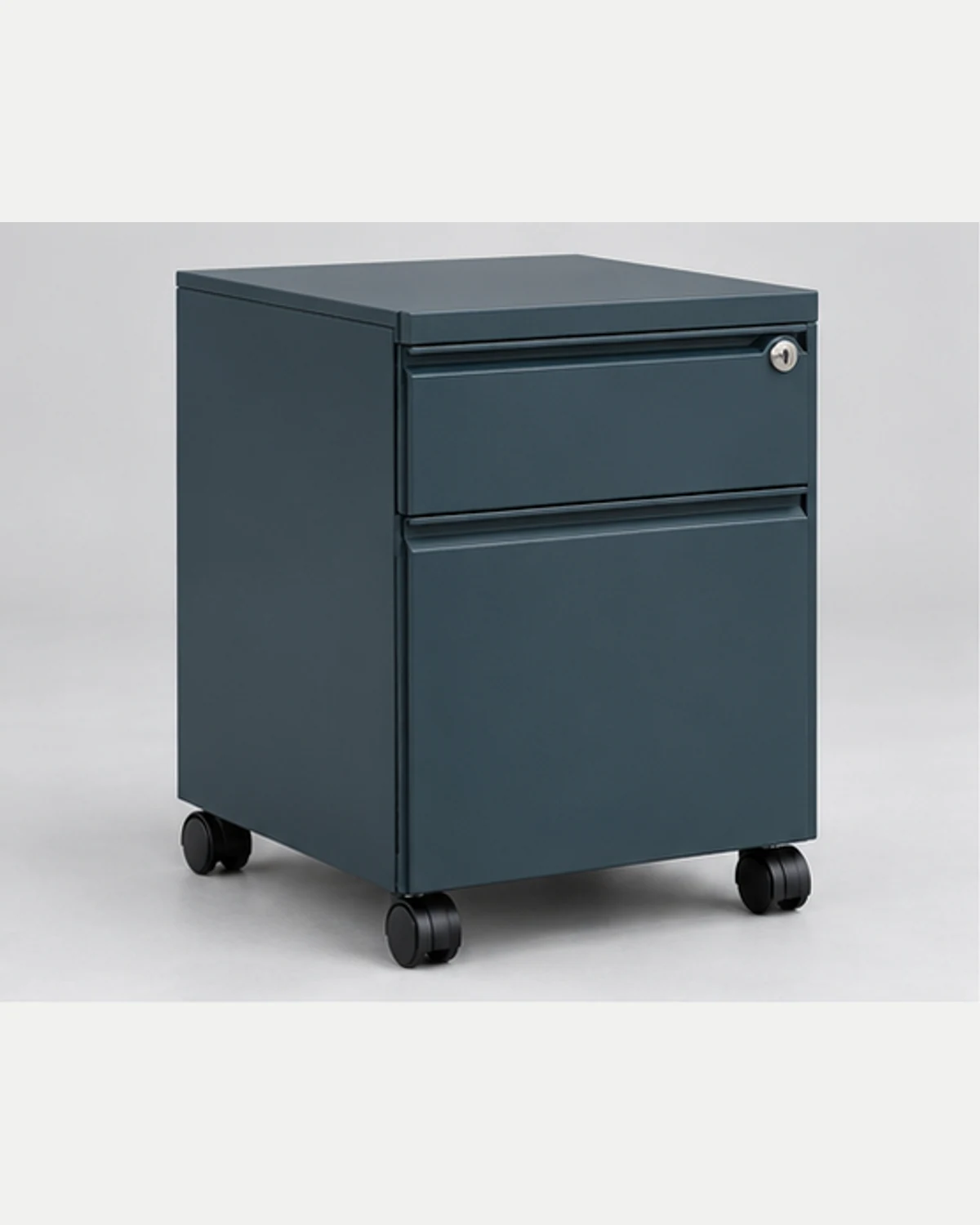
The Hanging-File Mobile Pedestal is a candidate for a discussion about filing arrangements, not proof that a particular folder size or rail system is included. Record the required arrangement in the inquiry and request supporting drawings or sample confirmation. When the cabinet is intended mainly for personal items, identify usable compartment needs instead of asking only for a larger external size.
Treat castors and movement as a purchasing decision
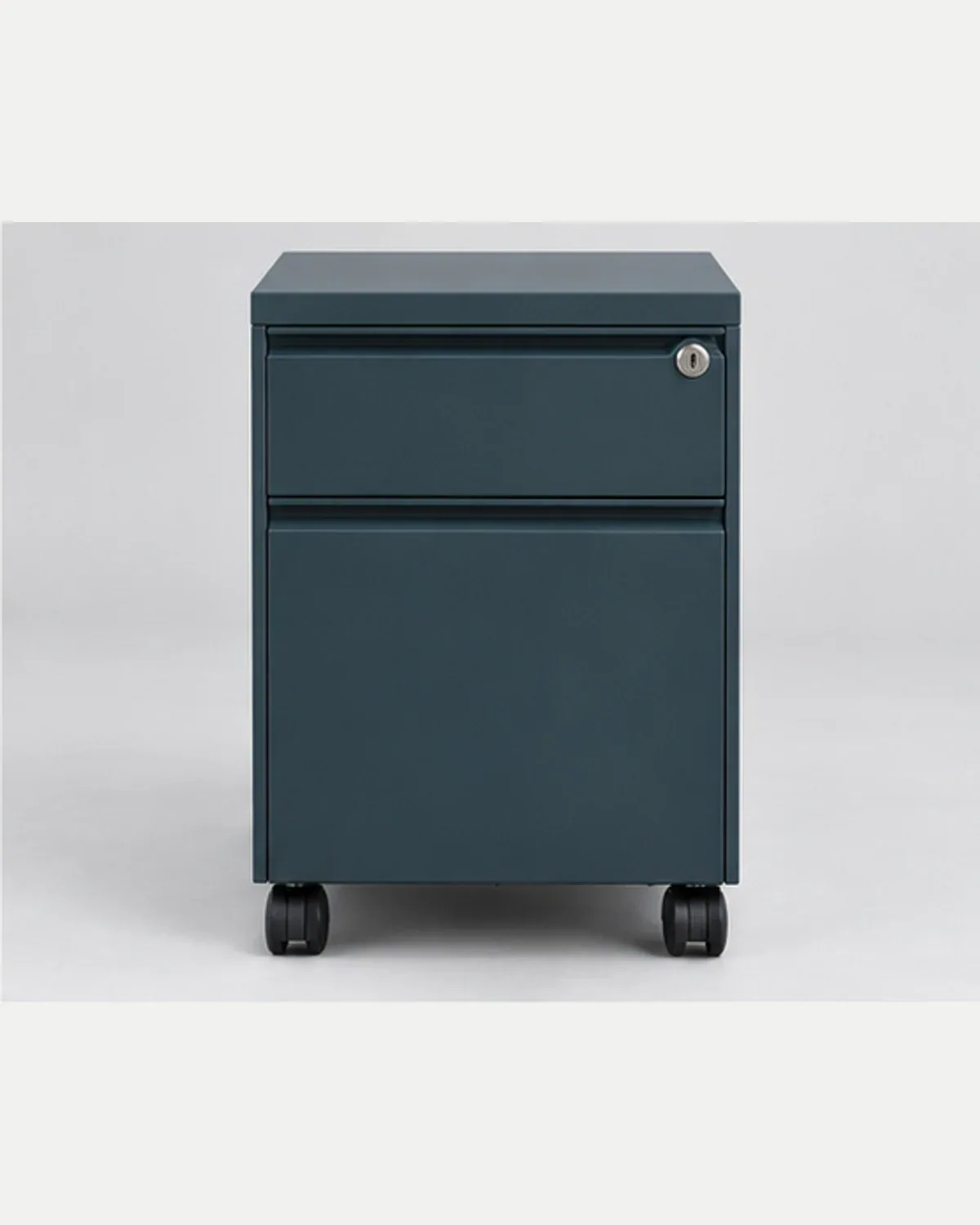
Explain how often the pedestal will be moved and over what type of floor. Ask which castor arrangement is proposed, how movement is controlled and whether the selected configuration requires an additional support arrangement when drawers are used. Request operating and installation information for the actual candidate. Avoid converting a generic product label into a claim about stability or load performance. If the project specifies a test or formal assessment, state the requirement and ask for evidence with a clear connection to the selected configuration.
Consider delivery handling as well as daily use. Determine whether castors arrive installed or are fitted at the destination. Where fitting is required, agree who provides instructions, checks the completed assembly and resolves missing parts. Do not approve a packing change without checking its effect on the buyer's installation work. A lower quoted packing volume is useful only when the receiving team understands the resulting assembly responsibilities.
Coordinate locking and day-to-day access
Describe who will use each pedestal and how keys should be managed. Individual staff storage, shared team drawers and facilities-controlled spare keys create different requirements. Ask whether keyed-alike batches, individual keying or another access arrangement can be provided for the chosen model. Record how replacement keys and lock identification should be handled. A lock is an access feature; it should not be presented as evidence of a security rating or suitability for regulated records.
For office projects with phased delivery, consider how later batches will be identified. A buyer may need consistent labels or documented lock references, but feasibility should be confirmed before an order is accepted. Keep personal employee information out of a general supplier inquiry. Describe the access policy and allocation method without sharing a staff list when it is not needed for product selection.
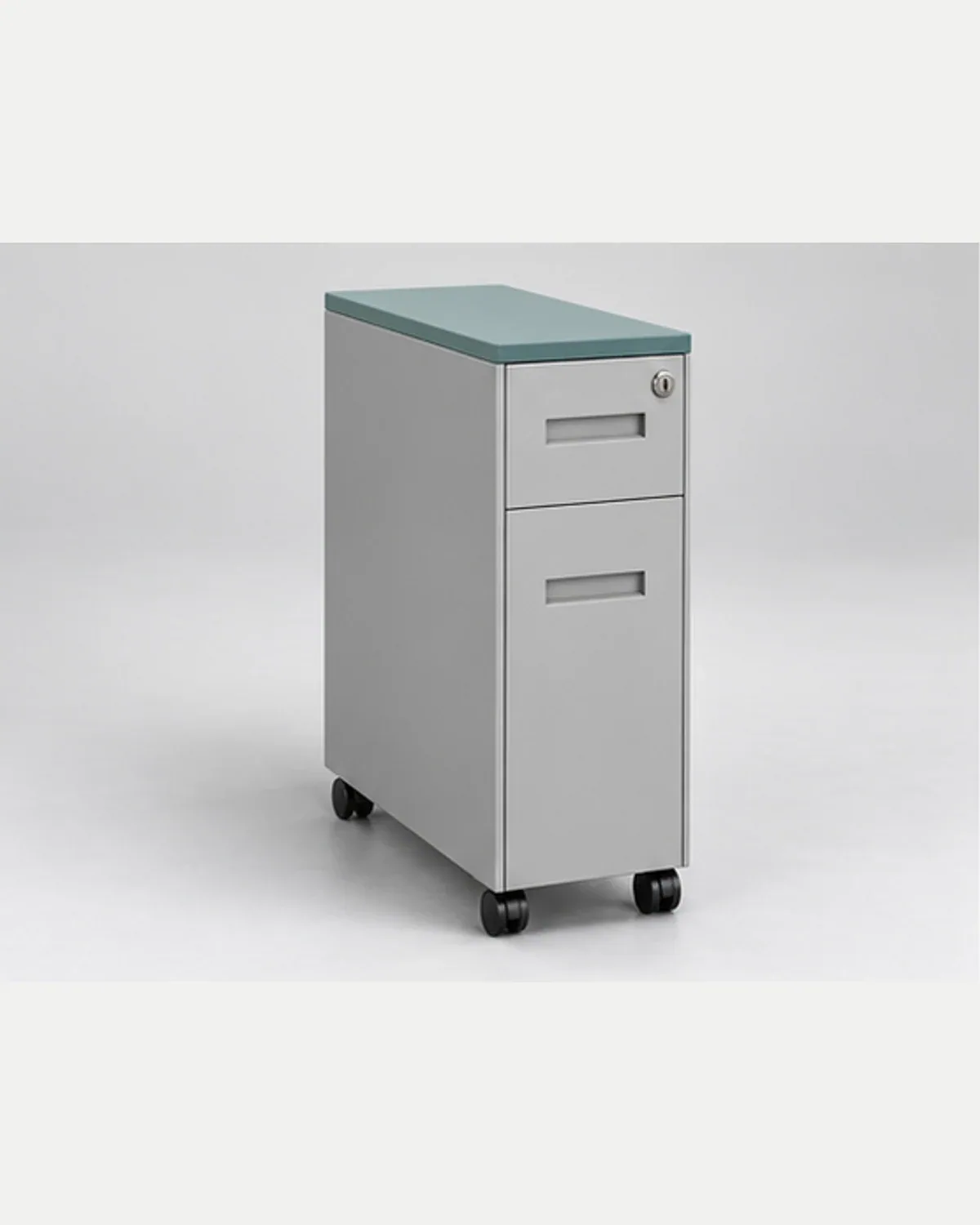
Approve appearance through an agreed reference
List the desk finishes, handles and visible hardware that the pedestal should coordinate with. Screen colors and a product rendering are starting points for discussion, not final finish approval. Request an appropriate reference or sample and document the agreed appearance. If branding is required, identify the location, artwork approval process and whether marks appear on the product, carton or both. Separate essential project requirements from preferences that can be discussed after the first quotation.
Ask how a proposed change affects the approved sample or reference. Altering a handle, castor or drawer front may change clearances or assembly work even when the overall style appears similar. Maintain a revision record so that procurement, the supplier and the receiving team are evaluating the same specification. This is particularly helpful when a distributor is building a coordinated desk and storage range.
Put packing and receiving checks into the inquiry
Specify the destination, delivery access and preferred handling arrangement. Ask for the proposed product protection, carton identification and any assembly information that will accompany the goods. Confirm the packing proposal for the chosen model rather than copying another cabinet's carton data. For mixed furniture orders, agree how pedestal cartons will be linked to the corresponding desk or installation area. Clear identification can make a staged project easier to receive and inspect.
The export documentation overview distinguishes common commercial and packing documents. Use it as background reading, then ask the importer and forwarder to confirm shipment-specific requirements. Do not treat a generic checklist as a substitute for destination advice. Quantities, descriptions and packing references should be consistent across the agreed order and shipment documents.
Send a quotation brief that can be checked
Prepare a concise package containing the desk drawing, proposed pedestal location, drawer functions, lock requirements, finish references, quantity and destination. Identify unresolved items and the evidence needed to close them. Ask the supplier to separate confirmed details from optional proposals in its response. This helps a buyer compare quotations on an equivalent basis rather than selecting a price that omits important configuration or receiving work.
For a wider office project, review the corporate office solutions and record any products that need coordinated approval. Send the combined requirements through the procurement contact team. A useful next step is a clarified specification and quotation scope, with model-specific details still subject to confirmation. This approach supports a purchasing decision without turning a candidate image or an initial discussion into a performance guarantee.
Bulk purchasing worksheet: approve the whole workstation
| Decision | Buyer input | Requested confirmation |
|---|---|---|
| Desk fit | Underside drawing and obstruction locations | Usable clearance and proposed cabinet position |
| Drawer access | Folder format and opening route | Internal layout and operating space |
| Mobility | Floor and movement pattern | Castor and parking arrangement |
| Locks | User allocation and spare-key policy | Proposed key configuration |
| Packing | Receiving route and assembly responsibilities | Packing proposal and component list |
For OEM/ODM or phased bulk purchasing, assign one reference to the desk-and-pedestal combination, then record which variants use it. Request separate confirmation for a different frame, cable tray, drawer layout or handle. Have the buyer identify an approval owner and a receiving contact; these are responsibilities, not invented supplier services. Ask for an itemized quotation that distinguishes the proposed product, optional fittings, sample work and delivery scope. Attach the completed worksheet when you request a pedestal project quote.
Buyer FAQ
What should an importer send before selecting an under-desk pedestal?
Send the desk underside drawing, intended location, drawer functions, folder format, lock preferences, quantity and destination. Identify which dimensions and installation details remain open.
Can a catalog image establish desk compatibility?
No. A picture cannot confirm underside clearance, drawer travel or the proposed fittings. Request configuration-specific drawings or sample review for the selected candidate.
Should packing be agreed before comparing quotations?
Yes. Clarify whether the proposed unit arrives assembled, which parts require destination fitting and how cartons and accessories will be identified for receiving.